
Architect of the Impossible Crime
Most detective stories begin with a simple question: who committed the crime? The novels of John Dickson Carr asked something far stranger:
- How could a murder take place inside a room locked from the inside?
- How could footprints suddenly disappear in the snow?
- How could a killer seem to vanish into thin air?
During the Golden Age of detective fiction, Carr became one of the great masters of the impossible crime story. His novels blended intricate puzzles with Gothic atmosphere, creating mysteries that often seemed supernatural before finally revealing the logic hidden beneath the illusion.
The Man Behind the Impossible

John Dickson Carr was born on November 30, 1906, in Uniontown, Pennsylvania, in the United States. The son of a lawyer and politician, Carr grew up surrounded by books and developed an early fascination with history, mystery stories, and Gothic fiction. Writers such as Edgar Allan Poe, Arthur Conan Doyle, G. K. Chesterton, and Gaston Leroux left a strong impression on him, particularly their ability to combine atmosphere, mystery, and seemingly impossible events with detective fiction.
Although Carr is often associated with English detective fiction because of his settings, characters, and long residence in Britain, he remained an American writer and became one of the major international voices of the Golden Age of detective fiction. After attending Haverford College, he eventually moved to England, where the country’s old inns, narrow streets, foggy landscapes, and historic buildings would heavily influence the atmosphere of his fiction. It was there, during the 1930s, that he began publishing the novels that established him as one of the great architects of the impossible crime story.
Carr quickly became known for a very specific type of mystery: the impossible crime. Locked rooms, vanished murderers, impossible alibis, and crimes that appeared supernatural became his trademark. While many detective writers focused primarily on clues and deduction, Carr added a strong sense of theatricality and Gothic atmosphere to his stories, creating mysteries that often felt eerie before ultimately revealing a rational explanation.
Over the course of his career, Carr wrote dozens of novels and short stories under his own name as well as several pseudonyms, including Carter Dickson, Carr Dickson, and Roger Fairbairn. His work earned the admiration of readers and fellow mystery writers alike, and he remains one of the most important figures in the history of the locked-room mystery.
The Detectives of the Locked Room
Among the many detectives created by John Dickson Carr, two figures came to dominate his world of impossible crimes: Dr. Gideon Fell and Sir Henry Merrivale. Though very different in personality, both detectives became closely associated with the locked-room mystery and the strange, theatrical atmosphere that defined Carr’s fiction.
Readers looking to meet Carr’s two great detectives might begin with:


Dr. Gideon Fell
- Hag’s Nook
- The Three Coffins / The Hollow Man
- The Arabian Nights Murder
- The Seat of the Scornful
Sir Henry Merrivale
- The Judas Window
- The Skeleton in the Clock

Dr. Gideon Fell, who first appeared in Hag’s Nook in 1933, is perhaps Carr’s most recognizable detective. Broad, eccentric, witty, and physically imposing, Fell was partially inspired by G. K. Chesterton and even physically resembled the famous author in many readers’ imaginations. Hidden beneath Fell’s humor and chaotic appearance, however, was a brilliant analytical mind capable of dismantling crimes that appeared completely impossible. Fell often moved through worlds filled with ancient traditions, shadowed corridors, isolated mansions, and seemingly supernatural events before revealing the rational explanation hidden beneath the illusion.


Many readers consider The Three Coffins — also published in some editions as The Hollow Man — to be the crown jewel of Carr’s impossible crime fiction. The novel is especially famous for its “locked-room lecture,” in which Dr. Fell discusses the history and mechanics of impossible crimes directly within the story itself. The book remains one of the most celebrated locked-room mysteries ever written.

Carr’s second great detective, Sir Henry Merrivale, appeared in the novels written under the pseudonym Carter Dickson. Frequently known simply as “H.M.,” Merrivale was louder, more chaotic, and often more comedic than Fell. Beneath the bluster and humor, however, stood another brilliant investigator capable of untangling impossible situations and elaborate deceptions. Hugely popular with readers, Merrivale brought a more explosive and unpredictable energy to Carr’s fiction. If Fell sometimes resembled a mysterious scholar stepping into Gothic nightmares, Merrivale often felt like a storm crashing directly into the middle of the mystery.
Through these detectives, Carr transformed the impossible crime story into something larger than a simple puzzle. His mysteries became theatrical confrontations between logic and illusion, where detectives were forced to explain events that seemed, at least for a moment, beyond rational understanding.
Architect of the Impossible Crime
During the Golden Age of detective fiction, many writers created clever puzzles and memorable detectives, but John Dickson Carr built his reputation around something far more unusual: the impossible crime. Again and again, Carr placed his readers in situations that seemed completely irrational. Murderers vanished from locked rooms, victims died under impossible circumstances, and crimes appeared to defy logic itself.
What made Carr stand out, however, was not simply the trick. His novels created an atmosphere where the supernatural almost seemed possible. Old houses, fog-covered streets, family legends, hidden passages, strange masks, and shadowed corridors filled many of his stories with a Gothic energy rarely seen in other Golden Age mysteries. For a moment, readers could genuinely believe that ghosts, curses, or something beyond human understanding might be responsible for the crime.
Yet Carr always returned to logic. Beneath the atmosphere, the impossible crime remained a puzzle waiting to be solved. This balance between eerie atmosphere and rational explanation became one of Carr’s greatest trademarks and helped make him one of the defining masters of the locked-room mystery.
Carr also understood that detective fiction could be entertaining as well as clever. His novels often mixed suspense with humor, theatrical dialogue, eccentric characters, and dramatic reveals. Whether through the imposing presence of Dr. Gideon Fell or the chaotic energy of Sir Henry Merrivale, Carr’s stories rarely felt cold or mechanical. Even at their most intricate, they retained a sense of fun and performance that continues to attract readers to this day.
Beyond the Locked Door
Although John Dickson Carr became famous for impossible crimes and locked-room mysteries, his interests as a writer extended beyond traditional detective fiction. Alongside his mystery novels, Carr also wrote historical fiction and stories inspired by his fascination with earlier periods of history, particularly eighteenth-century England.
This love of history could already be felt in many of his detective stories. Ancient traditions, old manuscripts, forgotten crimes, crumbling mansions, and echoes of the past frequently appeared throughout his fiction, giving his mysteries a distinctive atmosphere that separated him from many of his Golden Age contemporaries. Even when the crimes themselves were modern, Carr’s novels often felt connected to older worlds filled with secrets, legends, and hidden histories.
Among Carr’s non-detective and historical works were:

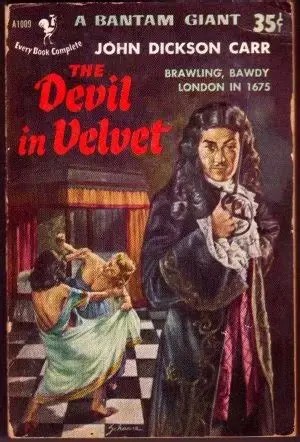

- The Devil in Velvet
- Fire, Burn!
- The Bride of Newgate
- The Hungry Goblin
Carr’s storytelling style moved comfortably between mystery, adventure, Gothic fiction, and historical atmosphere. While the impossible crime remained at the center of his reputation, his work showed that detective fiction could borrow from many different traditions while still remaining entertaining and accessible to readers.
This mixture of puzzle, atmosphere, and historical imagination helped Carr create stories that still feel distinctive within the larger world of Golden Age detective fiction.
Did Carr Ever Walk Away?
Unlike some Golden Age writers who eventually grew tired of their detectives or moved away from mystery fiction, John Dickson Carr largely remained faithful to the world of impossible crimes throughout his career. While he explored historical fiction and experimented with different atmospheres and settings, Carr never truly abandoned the detective story that had made his reputation.
Instead, he continued refining the locked-room mystery and the impossible crime, returning again and again to the kind of elaborate puzzles that fascinated both him and his readers. Even as literary tastes changed and hardboiled crime fiction gained popularity, Carr largely stayed committed to the theatrical, puzzle-oriented tradition of the Golden Age.
In many ways, this dedication became part of Carr’s legacy. He remained one of the genre’s great defenders of the impossible crime, proving that mystery fiction could be eerie, imaginative, and entertaining while still respecting logic and fair play. Rather than walking away from detective fiction, Carr continued building some of its most memorable impossible mysteries well into his later career.
From Radio Waves to Modern Mysteries
The influence of John Dickson Carr continued far beyond the original Golden Age of detective fiction. Over the years, his elaborate puzzles and theatrical mysteries earned admiration from generations of mystery readers, writers, and fans of classic detective fiction. While Carr never became as universally known to the general public as Agatha Christie, he developed a devoted following among readers fascinated by intricate mysteries and seemingly impossible situations.
Carr’s work outside the novel also helped expand his reputation. During the mid-twentieth century, he wrote extensively for radio, contributing scripts to suspense and mystery programs such as Suspense and the BBC’s Appointment with Fear. He also created Cabin B-13, a radio series built around strange and dangerous stories told aboard a ship at sea. Another of his creations, Colonel March of the Department of Queer Complaints, later reached television audiences through an adaptation starring Boris Karloff, famous for playing Frankenstein’s monster on screen.

Carr’s influence remained strong within detective fiction itself. Later writers fascinated by elaborate puzzles and seemingly impossible situations frequently looked back to his work as a major inspiration, particularly The Three Coffins and its famous locked-room lecture. His stories helped preserve the tradition of fair-play detective fiction while showing how atmosphere, humor, and Gothic imagination could exist alongside logical deduction.
Even today, Carr’s novels continue to be reprinted and rediscovered by readers searching for classic mystery fiction filled with atmosphere, illusion, and clever deception. For many fans of the genre, his name remains closely tied to the art of the impossible crime.
Later Years Beneath the Shadow
As the decades passed and detective fiction continued to evolve, John Dickson Carr remained closely tied to the classic mystery tradition he had helped shape. Although changing literary tastes gradually pushed hardboiled crime fiction and spy novels further into the spotlight, Carr continued writing the elaborate puzzles and atmospheric mysteries that had defined his career.
In his later years, Carr faced a number of health problems, including the effects of strokes that slowed his work and limited his activities. Even so, he remained an admired figure within the world of detective fiction, particularly among readers and writers who continued to appreciate the art of the impossible crime and the locked-room mystery.
Carr eventually returned to the United States after many years spent in England, the country that had inspired so much of the atmosphere found in his fiction. He died on February 27, 1977, in Greenville, South Carolina, at the age of seventy.
Although the Golden Age of detective fiction had long since passed by the time of his death, Carr’s reputation endured. His novels continued to be rediscovered by new generations of mystery readers fascinated by impossible crimes, Gothic atmosphere, and the strange pleasure of watching logic dismantle the seemingly supernatural.
The Locked Room Remains Open
John Dickson Carr helped transform the impossible crime from a simple puzzle into one of the most atmospheric and memorable forms of detective fiction. Through locked rooms, vanished killers, eerie legends, and seemingly supernatural mysteries, he created stories that invited readers to question what they thought was possible before revealing the logic hidden beneath the illusion.
While many Golden Age writers became known for detectives, villages, or carefully hidden clues, Carr carved out a world uniquely his own — one filled with Gothic atmosphere, theatrical mystery, and elaborate deceptions that continue to fascinate readers decades later. Whether through Dr. Gideon Fell, Sir Henry Merrivale, or the legendary puzzles of The Three Coffins, his work remains closely tied to the enduring appeal of the impossible crime.
But what about you?
Have you ever read a locked-room mystery or an impossible crime story that truly surprised you?
References
Dr. Gideon Fell Mysteries
- Hag’s Nook
- The Three Coffins / The Hollow Man
- The Arabian Nights Murder
- The Seat of the Scornful
- The Skeleton in the Clock
- The Burning Court
Sir Henry Merrivale / Carter Dickson Mysteries
- The Judas Window
Historical and Other Works
- The Devil in Velvet
- Fire, Burn!
- The Bride of Newgate
Reference Works
- The Golden Age of Murder — Martin Edwards
- Masters of the Humdrum Mystery — Curt J. Evans
- Talking About Detective Fiction — P. D. James
- Le Détectionnaire — Norbert Spehner
- Histoire du Roman Policier — Jean Bourdier
Media and Adaptations
- Colonel March of Scotland Yard starring Boris Karloff
- Cabin B-13
- Suspense
- Appointment with Fear
Previous: Margery Allingham — The Adventurer of the Golden Age
Next: Anthony Berkeley — The Man Who Changed the Rules








Hello Gumshoe! On the track or authors? leave us reply!